Museums are rethinking how art is encountered, moving beyond gallery walls into everyday public space. Leading this shift, the National Gallery has launched an initiative that places iconic works within the urban landscape, centered on Murals reMastered, a nationwide collaboration with Global Street Art.
The project translates works from the collection into large scale murals across cities and towns in the UK, situating paintings within high footfall environments such as streets and retail areas. Beyond outreach, it tests how accessibility, reproduction, and meaning shift once these works leave their original context.
Murals reMastered extends the National Gallery’s presence beyond Trafalgar Square, reflecting a broader institutional shift. By placing artworks in unexpected settings, it encourages incidental engagement, folding art into daily routines rather than structured visits.
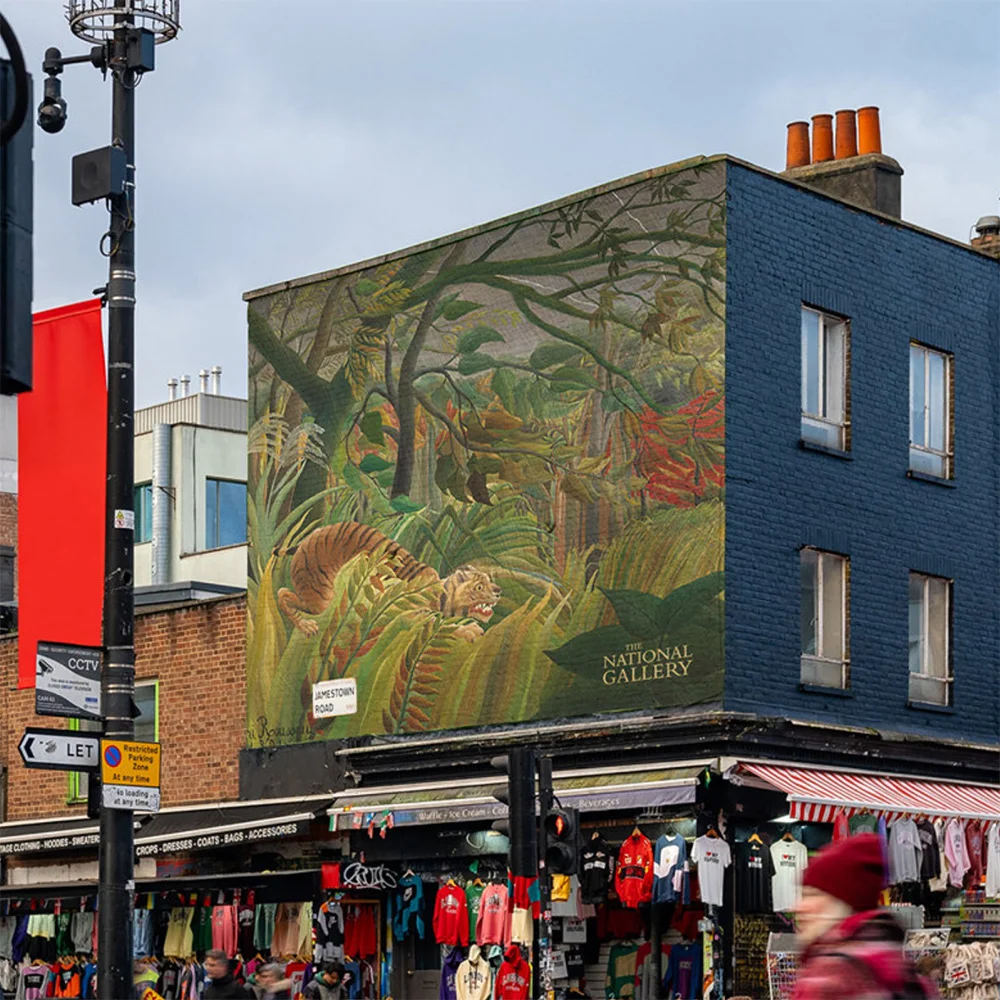
The first mural, unveiled in Camden, is a 40 square meter recreation of Surprised! (Tiger in a Tropical Storm) (1891) by Henri Rousseau. Installed on Jamestown Road near London Zoo, it reaches an estimated 1.8 million viewers each month, placing the work directly within the flow of the city.
Rousseau’s imagined jungle takes on a different presence at this scale. The tiger, pushing through dense foliage, becomes more immediate and theatrical. At the same time, the work’s material qualities flatten, shifting from painted surface to image designed for rapid visual impact.
Future installations are planned across the UK, including sites in Brent Cross and Carnaby Street, developed with commercial and urban partners. These locations prioritize visibility, pushing reach over traditional display.
Global Street Art shapes the project’s visual language, bringing a contemporary urban aesthetic that contrasts with the historical origins of the works. This tension reframes classical painting through the lens of street culture.
A previous mural, Angel Gabriel by Simone Martini, reportedly drew millions, pointing to strong public appetite. It also exposes a tradeoff: removed from scale, texture, and context, these works operate less as objects and more as circulating images.
Murals reMastered positions the National Gallery’s collection as something mobile rather than fixed, shifting art from a destination into something encountered, absorbed, and negotiated within the city itself.