Manifesta, the nomadic European biennial that uses each edition to engage with the social and historical realities of its host region, presents its sixteenth edition across Germany’s Ruhr Area, transforming disused postwar churches into spaces for art, dialogue, and community, exploring how history can unite.
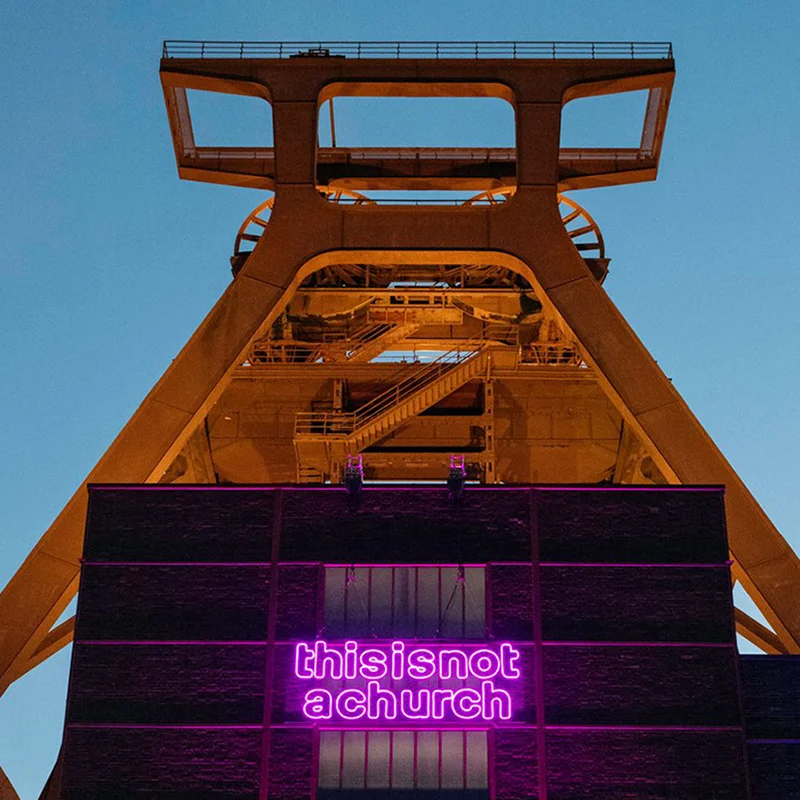
Manifesta 16 unfolds across Duisburg, Essen, Gelsenkirchen, and Bochum, with twelve former or underused churches forming the core of its programme. Under the title This is not a church, the biennial presents exhibitions, workshops, site specific commissions, and public events that reimagine these buildings as cultural and civic spaces.
The artistic programme has been developed by an interdisciplinary team of eight Creative Mediators, working individually and in intergenerational partnerships, each contributing a distinct perspective to the project.
The biennial’s choice of venues is rooted in the Ruhr Area’s postwar history. Following the widespread destruction of the Second World War, around one thousand churches were built across the region. Many replaced bombed buildings, while others served newly established neighbourhoods and migrant communities.
Collectively, they reflected a new architectural approach that moved away from the monumental forms associated with the Nazi period. Architects favoured modest materials, lowered altars, and more democratic spatial arrangements, creating buildings intended to bring people together rather than reinforce authority.
Today, many of these churches stand empty as congregations continue to decline. Some have been abandoned, while others face redevelopment or demolition. Manifesta responds to this changing landscape by asking what role these buildings can play once their original purpose has faded. Rather than treating them as relics, the biennial explores how they might once again serve their surrounding communities.
Central to this approach is the metaphor of the Trümmerziegel, or rubble brick. After the war, salvaged bricks from destroyed buildings were reused in reconstruction, embedding the physical remains of history within new architecture.
Manifesta adopts this idea as its conceptual framework. Artists work with discarded materials, including church benches, broken windows, and silent organ pipes, transforming the remnants of these buildings into newly commissioned works. Memory and transformation exist side by side, suggesting that renewal depends on engagement rather than erasure.
This approach extends beyond the exhibitions themselves. The biennial brings together 107 participants, including 67 newly commissioned projects. Alongside the exhibitions, the broader 16+ programme supports community initiatives across the Ruhr region through experimental theatre, workshops, shared cooking, and collaborative building activities.
The biennial has also attracted controversy. Artist Dorothee Bielfeld alleged that Nasan Tur’s installation Elevation, created from reclaimed church pews, closely resembled her earlier work Aufrichten. While Manifesta’s curators concluded that Tur’s installation was artistically independent and the artist rejected the allegations, the dispute raised broader questions surrounding authorship and artistic influence.