
Cecily Brown left London in 1994 feeling like a misfit. Thirty years on, she returns as one of the most significant painters of her generation, nervous, self-deprecating, and finally given the major institutional homecoming she deserves. Picture Making at Serpentine South is visceral, searching and wholly alive.
Brown was taken on by Gagosian in her twenties, and her works are held in the collections of MoMA and the Tate. A survey at the Metropolitan Museum followed in 2023. Her paintings fetch millions, with High Society (1998) selling for $9.8 million last November. Yet she had not had a major solo show in a UK institution since Modern Art Oxford in 2005, a striking gap in her home country’s recognition.
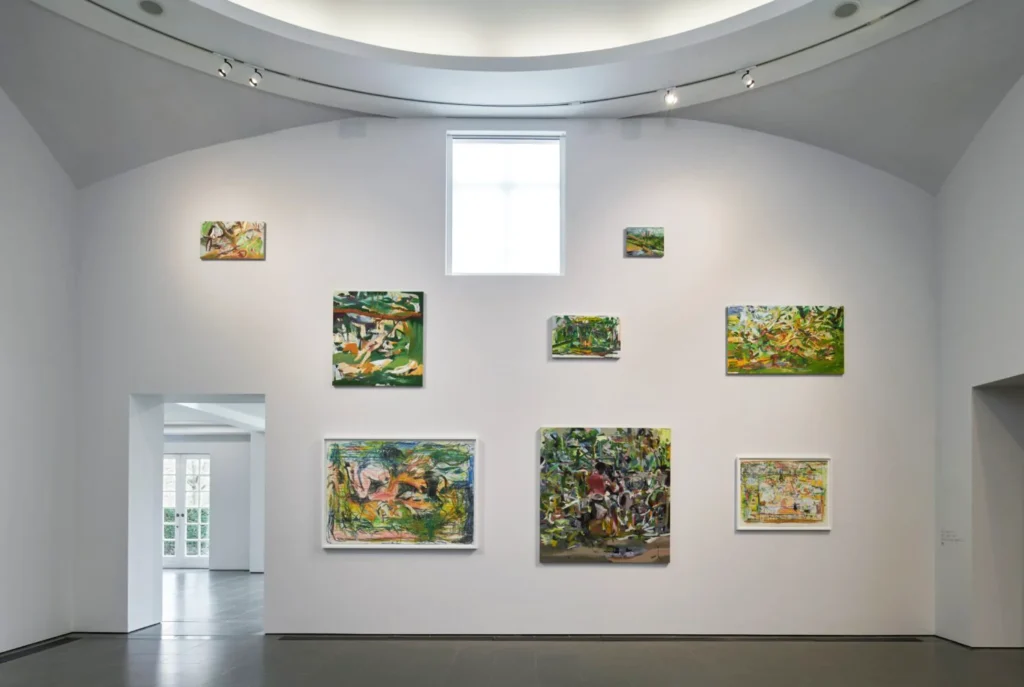
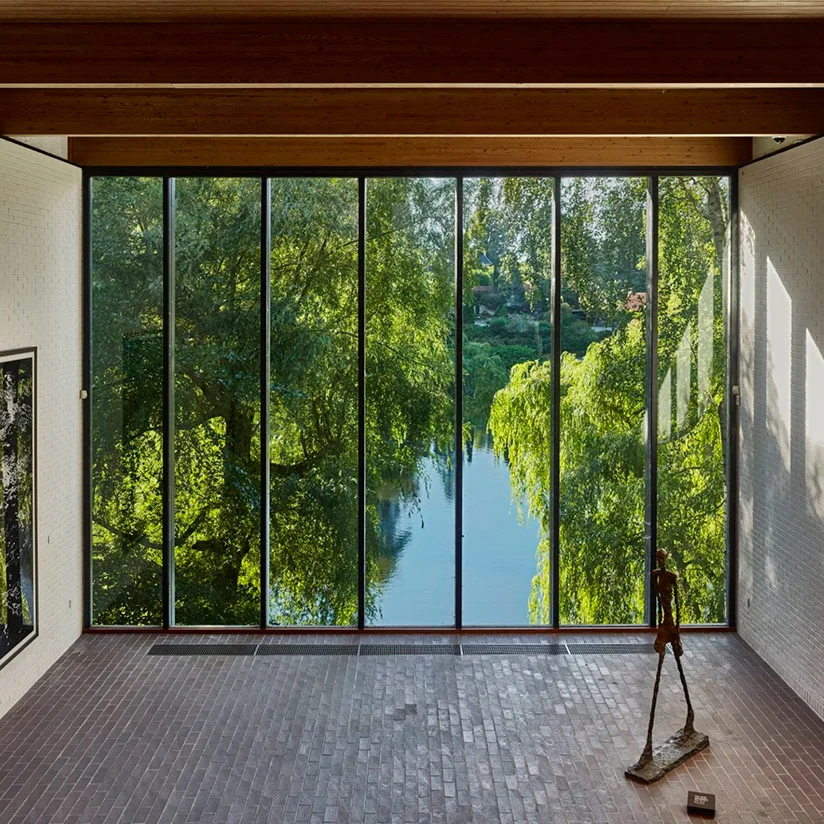
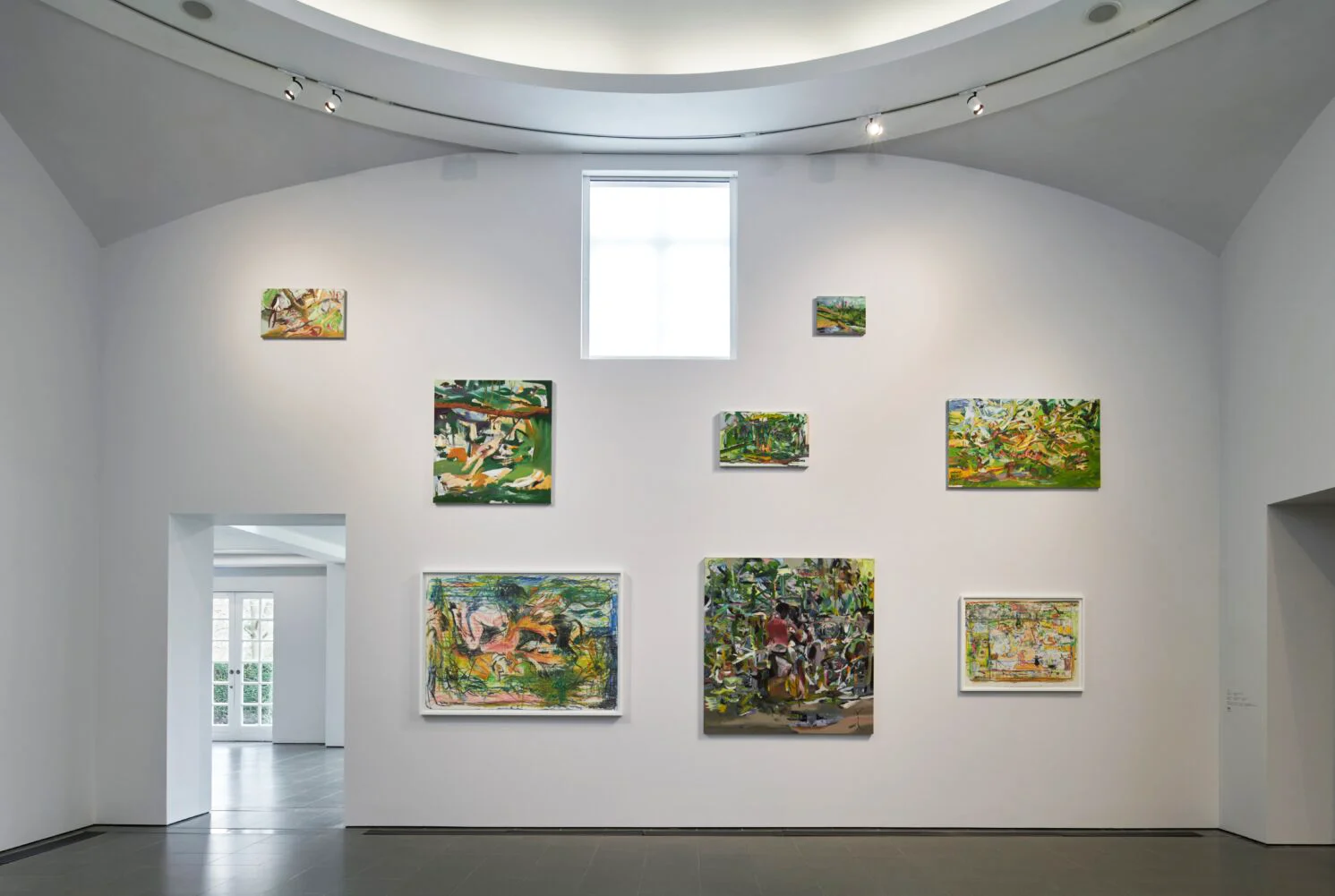
The show is anchored by new work made in New York while Brown held Kensington Gardens in her head. The canvases inspired by the park, visible through the gallery windows, pulse with energy.
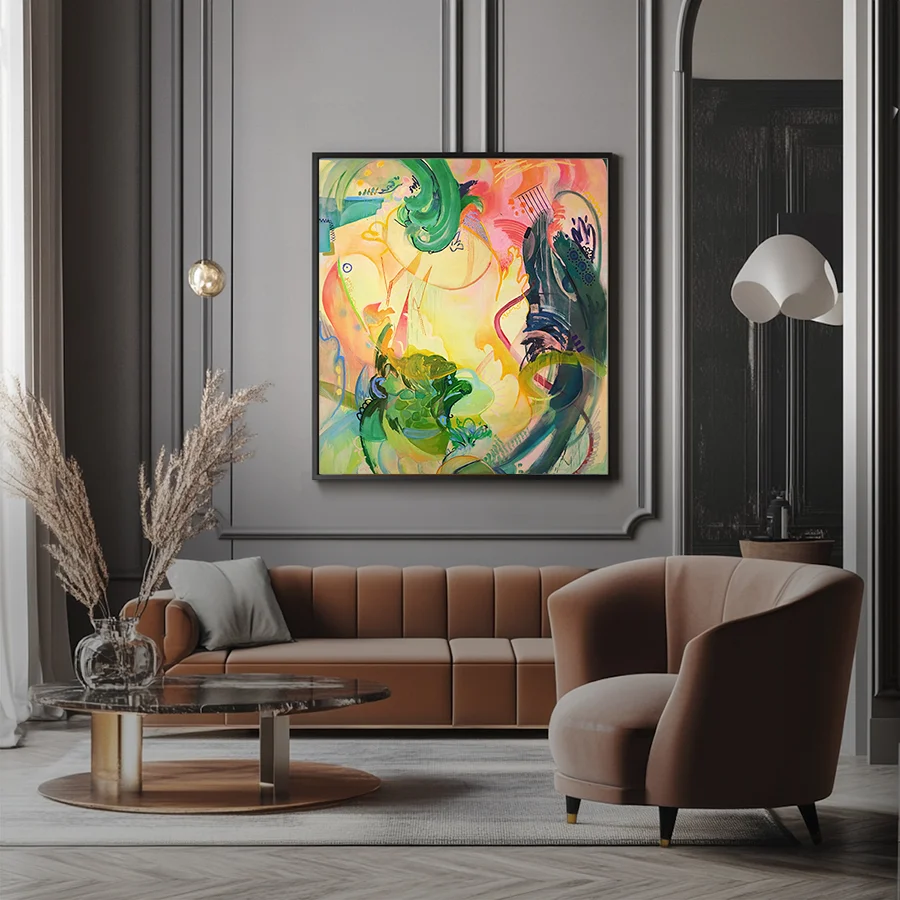
Streaks of yellow, spring green and mud brown collide across large surfaces. Recognisable forms flicker into view: a dog, a bird box, a figure among trees. Then they dissolve. The effect is immersive and restless. Brown has described her aim as catching something in the very process of transformation.
The Nature Walk series is central. Ranging from the festive Nature Walk with Nymphs to the charged Nature Walk with Paranoia and the gorgeously dissonant Nature Walk with Hysterical Sky, these works hold beauty and menace in tension. Brown describes nature as a battleground where violence and beauty cannot be separated.
In The Serpentine Picture, the glassy gallery building itself half-emerges from luminous, fluid strokes.
Alongside the new work, the exhibition reaches back to 2001. Early paintings such as Bacchanal and Couple, flirtatiously suggestive, flesh dissolving into foliage, remind us that bodies and landscape have always been Brown’s territory.
A notable addition is Terry and Julie, made after a lender withdrew Teenage Wildlife (2003). The title comes from The Kinks’ Waterloo Sunset, used not as illustration but as a reference held in the mind that colours the work’s emotional register. The result is sober and delicate, shot through with quiet resignation.
A fresh departure is Hurry Up Please It’s Time (2025), a still life reworking fish imagery from Turner’s Sun Rising Through Vapour via Lucian Freud. It signals a shift: Brown has been consciously simplifying, reducing her palette to red, yellow and blue, mixing her own colours to slow down a process that can otherwise move faster than thought.
Drawings and monotypes round out the show. Inspired by children’s book illustrations, they are more openly figurative and intended as ways into the more abstracted paintings. They also carry the nostalgia running through the whole exhibition: for England, for childhood, for her mother, the novelist Shena Mackay, whose prose Brown has described as inseparable from the person her mother was, from her love of nature and her feeling for animals and trees.
That nostalgia coexists with ambivalence. Brown is candid about the art market, arguing that greed has displaced creativity, and candid too about her own position within it: she has described herself as an inadvertent maker of luxury goods.
Standing in the galleries, with Kensington Gardens just outside and Brown’s churning canvases filling the walls, that distinction feels real. These are paintings made with genuine urgency. Difficult to read quickly. Impossible to forget.