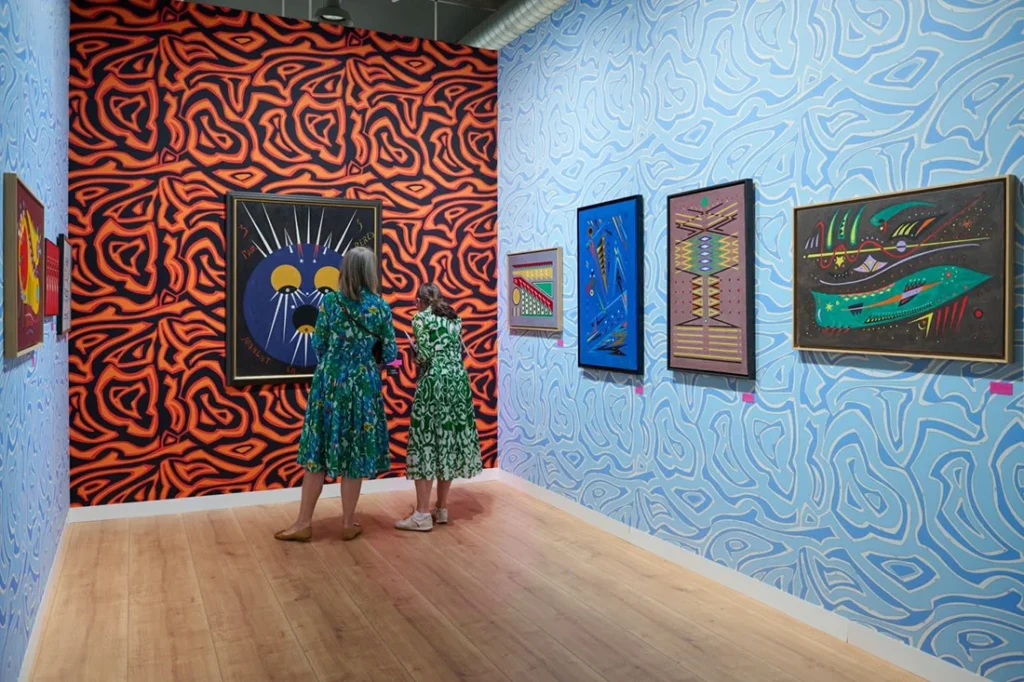
The 59th Carnegie International, If the word we, turns the Carnegie Museum of Art and sites across Pittsburgh into a meditation on collaboration, collective experience, and cultural exchange. It tests how institutions balance intellectual ambition with accessibility, intimacy, and social connection.
Curated by Ryan Inouye, Danielle A. Jackson, and Liz Park, the exhibition takes its title from a commissioned essay by the Egyptian writer Haytham el-Wardany. Rather than treating “we” as a fixed or unified identity, it frames it as porous, contradictory, and in flux. Park describes it as “a space of listening”, positioning the exhibition less as a statement than as an open structure shaped through dialogue, participation, and shared attention.
This emphasis on collectivity shapes the exhibition’s structure. The 59th edition is the most geographically expansive in Carnegie International history, built through partnerships across Pittsburgh and beyond. Works appear not only at the Carnegie Museum of Art, but also at the Mattress Factory, Children’s Museum of Pittsburgh, Kamin Science Center, and the Thelma Lovette YMCA. The project sits firmly within Pittsburgh’s cultural fabric while extending outward through an international network of artists and collaborators.
The curators situate this approach against a backdrop of political fragmentation, restricted mobility, and global instability. Their research involved sustained conversations with artists and organisers across contexts from São Paulo to Tromsø. These exchanges shaped an exhibition concerned less with spectacle than with the conditions that enable relationships, solidarities, and collective forms of knowledge.
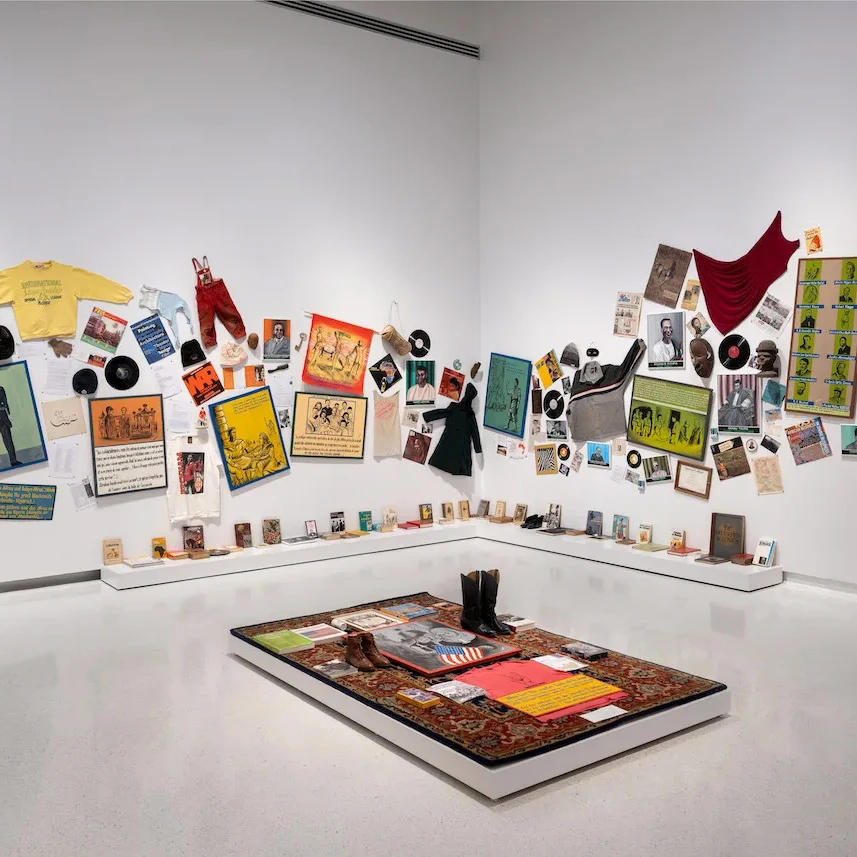
In its installation, If the word we translates these ideas into immersive, tactile environments that soften the museum’s scale. Shala Miller’s Flight invites visitors to recline on sloped bean bags while watching moving images overhead. Jasleen Kaur’s Supra creates a carpeted interior lit by artificial daylight filtered through false windows. Rooms become spaces designed for lingering rather than rapid viewing.
Several projects extend the exhibition’s propositions through collaboration itself. Silät, a collective of one hundred women weavers from Salta, Argentina led by Claudia Alarcón, embodies collective labour in material form. At the Mattress Factory, Arturo Kameya and Claudia Martínez Garay merge practices into a shared immersive installation, dissolving boundaries between individual authorship and joint production.
The exhibition also allows room for humour and self-reflection. Walter Scott’s large-scale diorama, declaring “REALITY HAS LESS TO DO WITH ME THAN I THOUGHT”, captures a core tension: contemporary art grounded less in individual certainty than in interdependence and limitation.
Founded in 1896, the Carnegie International is the longest-running exhibition of international contemporary art in North America. In this edition, If the word we frames contemporary art less as answers than as a space for thinking, listening, and being together differently.