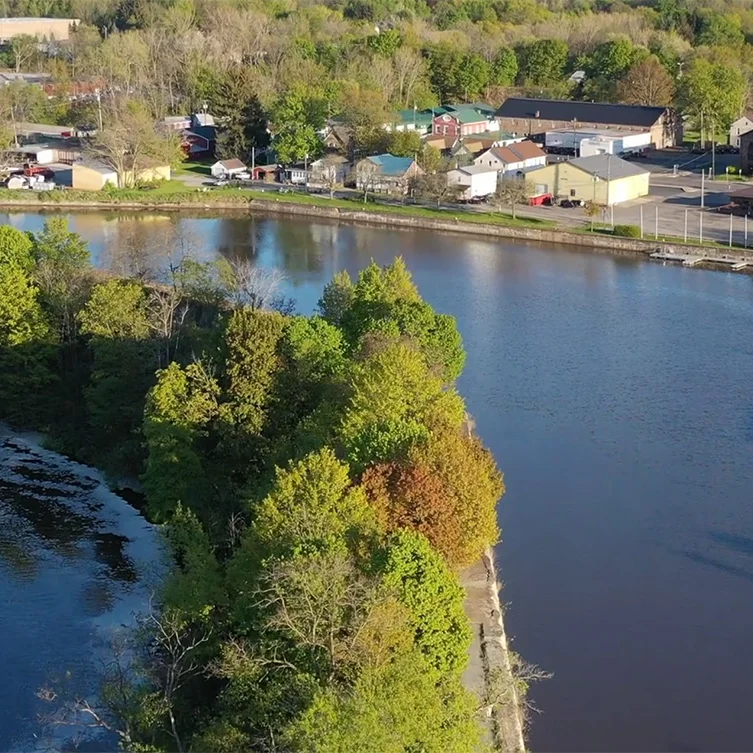
The Medina Triennial unfolds along the Erie Canal in Western New York as a village-wide exhibition titled All That Sustains Us. It brings together 39 artists and collectives in a free, walkable programme across post-industrial and public sites, linking contemporary art with ecology, labour, and infrastructure.
Co-curated by Kari Conte and Karin Laansoo, the Triennial positions Medina as an active site of cultural production shaped through long-term research and collaboration. Rural geography is treated as structurally central, not peripheral, to how contemporary art is made and understood today.
At its core, the exhibition is structured around maintenance as a defining condition of contemporary life. It draws on Mierle Laderman Ukeles’ Manifesto for Maintenance Art to frame upkeep as civic and existential labour. The focus is on systems that sustain daily life, supply chains, food production, energy, and ecological processes, and the forms of knowledge required to keep them functioning under strain.
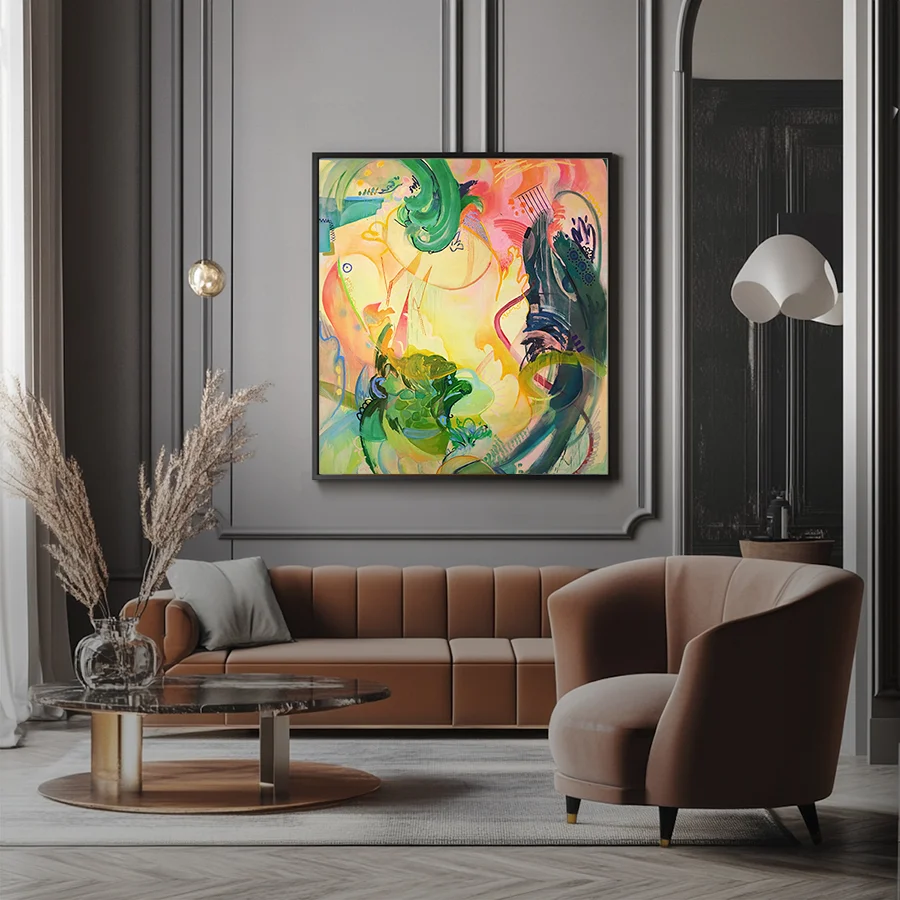
This framework takes shape through works grounded in human labour and global systems. Victoria-Idongesit Udondian transforms discarded garments into sculptural forms that reference migrant textile work and industrial production. Deirdre O’Mahony turns agricultural precarity into a sung libretto, linking farming to economic pressure. Michael Wang develops locally sourced maple-based energy systems, connecting ecology, labour, and historical economies of extraction. Dionne Lee uses analog photography to register survival knowledge embedded in gesture, landscape, and material trace.
Other works shift attention beyond the human and toward distributed agency. Aki Inomata collaborates with beavers, treating their carving as co-authored sculpture. Anne Duk-Hee Jordan builds water-based installations that function as open ecological systems, filtering and collecting rain. Taysir Batniji focuses on loss through photographs of personal objects left behind in destroyed homes. Together, these works relocate meaning into entangled relations between
bodies, materials, and environments.
The exhibition is organised across Medina’s built and natural landscape, forming a connected circuit of sites. Former schools, churches, parks, museums, and canal-side structures operate as venues, with the Medina Triennial Hub and the former high school as central anchors. Several works extend directly into the Erie Canal, making water infrastructure part of the exhibition itself. Movement through the town becomes the curatorial structure, rather than a backdrop to it.
Production is shaped through residencies and fieldwork embedded in the region. Artists collaborate with local farmers, scientists, and institutions to develop new commissions grounded in regional knowledge and material conditions. This process aligns artistic production with lived infrastructures rather than detached studio practice.
Supported by the New York Power Authority and the New York State Canal Corporation, the Triennial is framed within a wider effort to activate the Erie Canal as civic infrastructure. It resists treating rural space as marginal, instead positioning it as a site where contemporary cultural, ecological, and economic systems intersect.
What emerges is an exhibition that treats sustainability not as theme but as operating condition. It asks how systems persist, how they fray, and what forms of collective attention are required to sustain them over time.