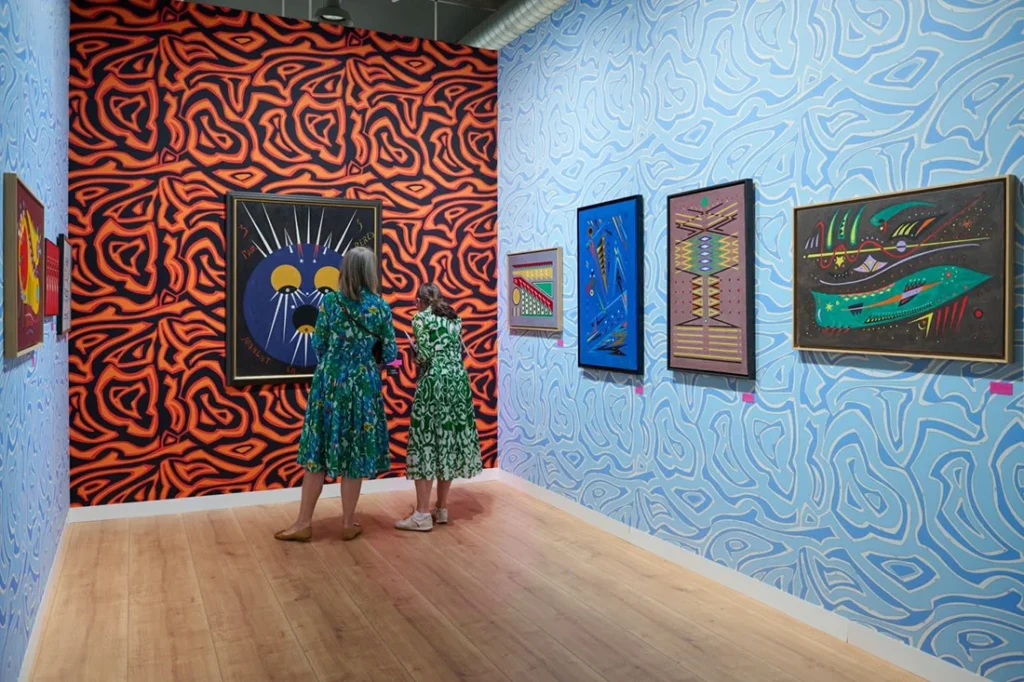
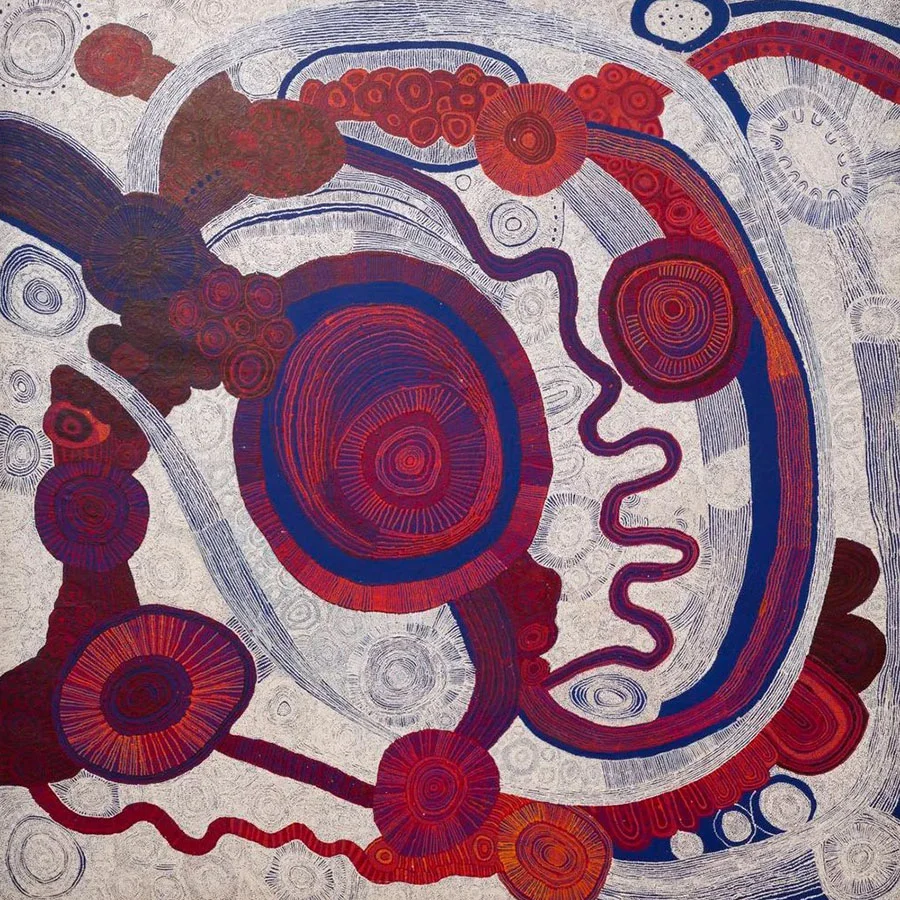
After three years of controversy, investigations and a $4.4 million defamation lawsuit, Ngura Puḻka – Epic Country has finally opened at the National Gallery of Australia. Thirty monumental paintings by Aṉangu artists of the APY Lands have found their way to Canberra, carrying with them stories of tjukurpa and cultural survival.
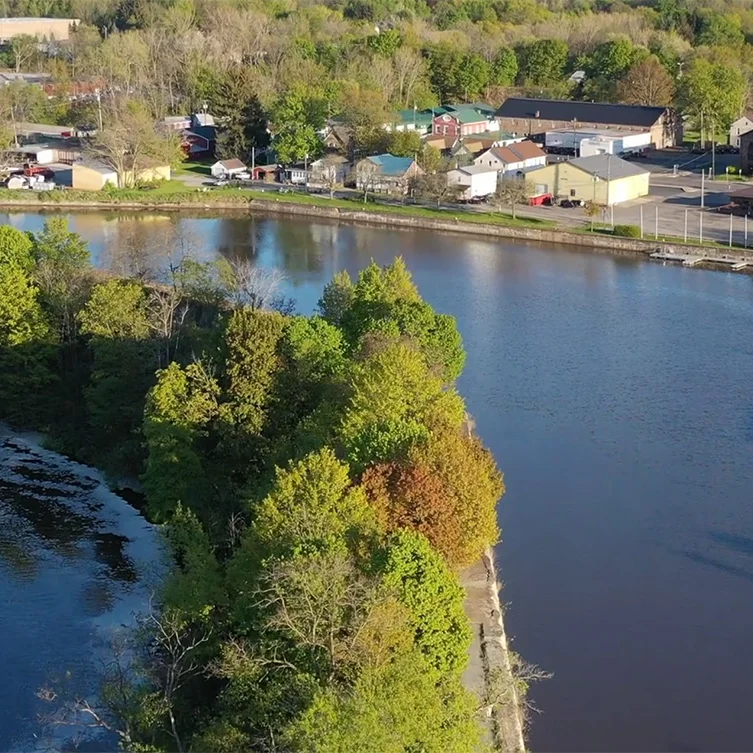
The exhibition spans Galleries 2 to 7 on Level 1 of the NGA. Its scale is fitting. The Aṉangu Pitjantjatjara Yankunytjatjara (APY) Lands of South Australia’s north-west are vast and culturally dense, and the artists have responded accordingly.
Large canvases, some at three metres square, depict aerial topographies of waterholes, riverbeds and spinifex plains. Others carry key Aṉangu tjukurpa: the Seven Sisters story, honey ant dreaming, the spirit figure known as the mamu. These are works conceived at scale because scale, as artist Yaritji Young has explained, is what the stories demand.
The project began during the COVID years as a collective undertaking across the APY arts centres, coordinated through the APY Arts Centre Collective (APYACC). Senior women artists, men’s collectives and individual painters all contributed.
That vision very nearly did not reach the gallery walls. In April 2023, The Australian published allegations that white studio assistants had painted substantial sections of works attributed to Indigenous artists, and had interfered with the depiction of tjukurpa. The APYACC denied the claims.
The NGA postponed the exhibition and commissioned an independent provenance review, which ultimately validated the works’ authorship. Subsequent investigations by the South Australian government, the ACCC and the Office of the Registrar of Indigenous Corporations all concluded without adverse findings against the collective.
The fallout was severe regardless. The Indigenous Art Code revoked APYACC’s membership. Government funding of $380,000 was suspended. Sales declined. The APYACC estimates total losses of over $2.4 million, which includes the NGA’s decision not to acquire any of the 30 works, despite an original intention to purchase all 28 of the initial selection. The collective is now pursuing Nationwide News, publisher of The Australian, for $4.4 million in the South Australian Supreme Court.
For the artists, frustration sits alongside something stronger. George Cooley, who only began painting in his late 60s and has since been selected for the Adelaide Biennial and the Wynne Prize, describes the collective’s model as a pathway for economic self-determination. It returns 85% of income directly to artists and arts centres.
Senior artist Sandra Pumani speaks simply of the happiness of painting country. Nyunmiti Burton wants the Seven Sisters story to reach beyond Australia. Yaritji Young’s honey ant dreaming, passed to her by her father and grandmother, is now being passed on to her own grandchildren.
The artists made these works to share their country and their stories with the world. After everything, the world can finally see them.