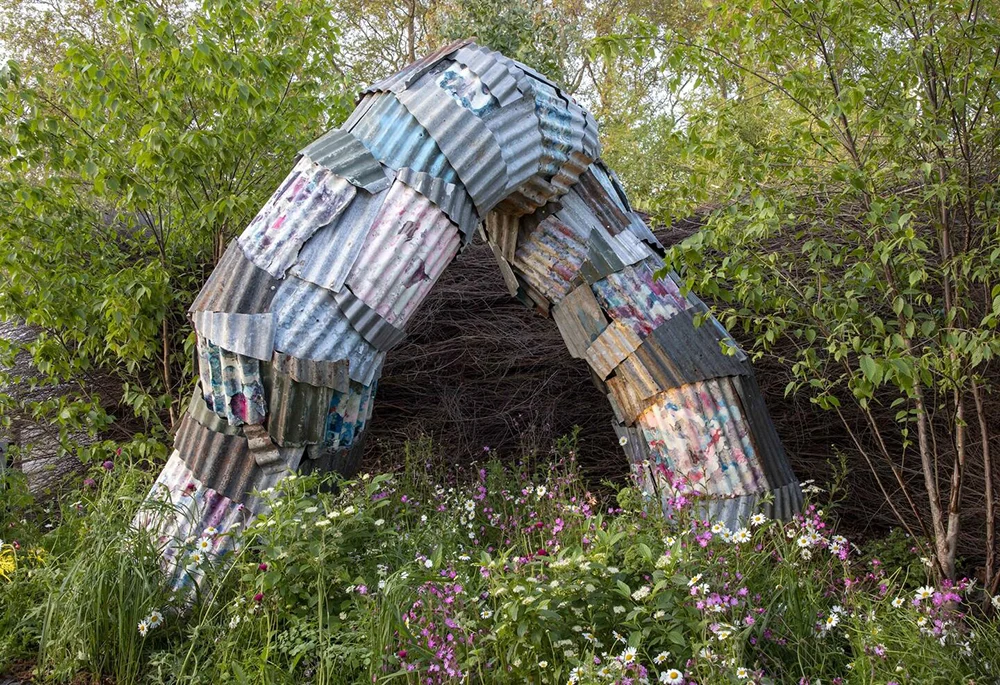
Rather than treating sculpture as a static object, Frieze Sculpture 2026 presents it as something living, adaptive and deeply connected to its surroundings. Bringing together 11 international artists, the exhibition explores hybridity through works that merge materials, histories and cultural perspectives across The Regent’s Park.
Now in its 14th edition, Frieze Sculpture is curated by Fatoş Üstek for the fourth consecutive year and unfolds throughout the English Gardens of The Regent’s Park. Running from 16 September to 1 November, the free outdoor exhibition places contemporary sculpture within one of London’s best known public landscapes.
Running alongside Frieze London and Frieze Masters, the exhibition also forms part of London Sculpture Week, joining the Fourth Plinth, East Bank, Sculpture in the City and The Line in a citywide celebration of public art.
Hybridity provides the conceptual thread connecting this year’s edition. The featured works combine diverse media, techniques and cultural references, encouraging visitors to view sculpture as a network of relationships shaped by spatial, social and environmental contexts. Together, the works bring materials, stories, communities and the surrounding landscape into dialogue, reflecting Üstek’s vision of sculpture as an expansive language that opens new ways of thinking and feeling.
The artists approach this theme from distinct perspectives. Angel Otero presents a portal-like doorway that appears to descend beneath the park’s surface, while Ramesh Mario Nithiyendran contributes a vibrant dual-faced figure rooted in mythology.
Ivana Bašić introduces a monumental brutalist work, Douglas White explores organic transformation, and Tarini Sethi presents The Sun Bathes Its Friends and Neighbours, four interconnected stainless-steel gates that imagine a world where humans, animals and plants coexist, dissolving conventional boundaries between species and identities.
The exhibition also includes works by Carolina Aguirre, Matyáš Chochola, Özlem Günyol and Mustafa Kunt, Elena Nemkova, Catriona Robertson and Conrad Shawcross, reflecting the breadth of contemporary sculptural practice across cultures and generations.
Inspired by the symbolic role of gates in Indian art history, Sethi’s sculpture functions as both a physical and metaphorical threshold. Its reflective steel surface captures shifting light, shadow and the movement of visitors, inviting audiences to become participants rather than observers.
As the surrounding environment changes throughout the day, the work continually transforms, reinforcing the exhibition’s central idea of sculpture as something shaped through encounter rather than fixed form.
The Mtec Bursary has been awarded to Dom Art Gallery and Elena Nemkova for the new commission Agony in the Garden (2026). Established in 2018, the bursary helps galleries cover the installation and de-installation costs of presenting new work at Frieze Sculpture.
Free curator-led tours will be held in September and November. A digital guide via Bloomberg Connects, including an audio tour narrated by Üstek, will also be available throughout the exhibition.