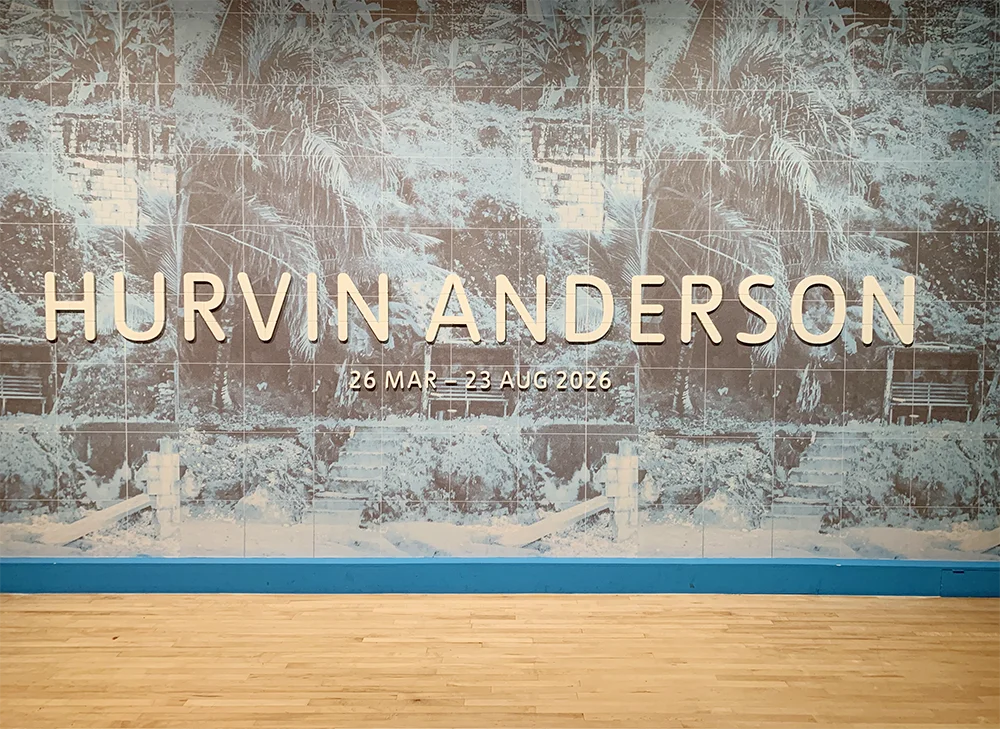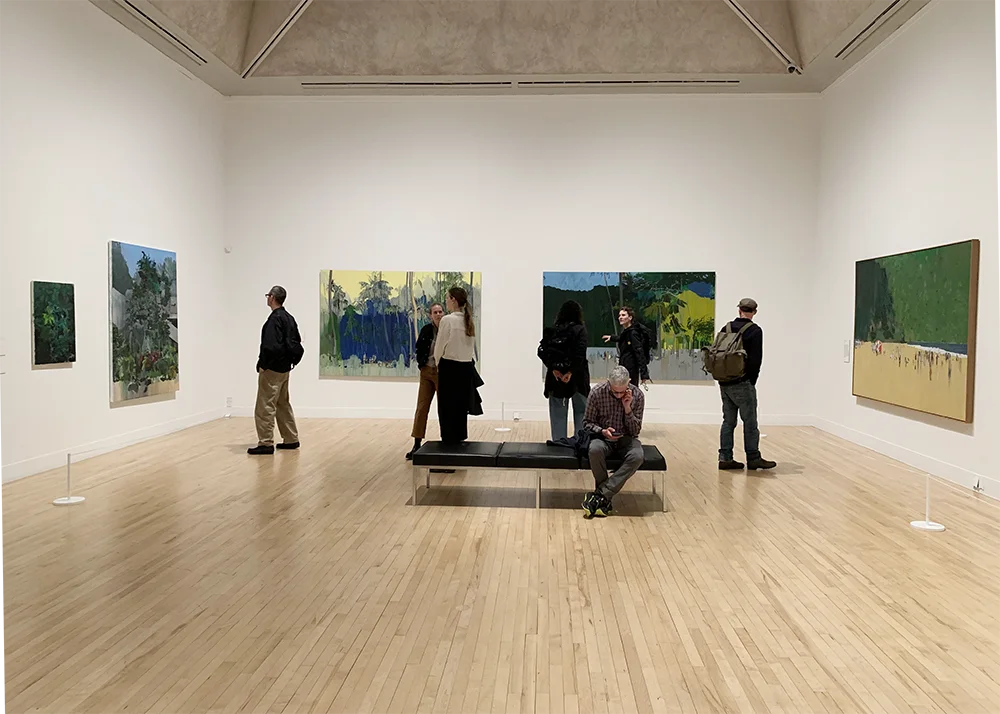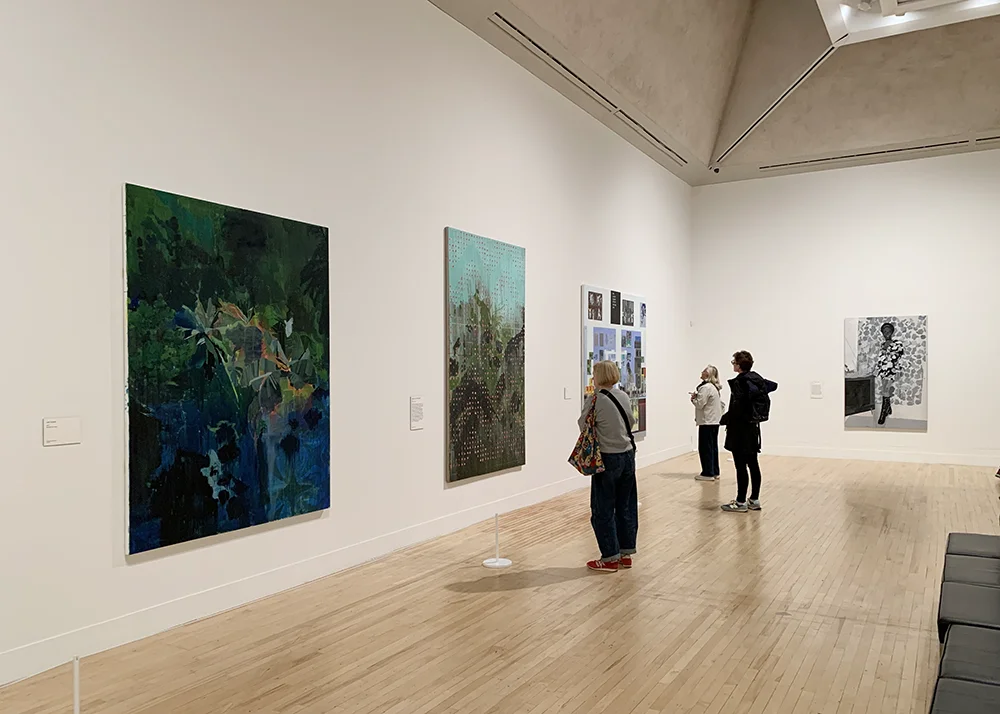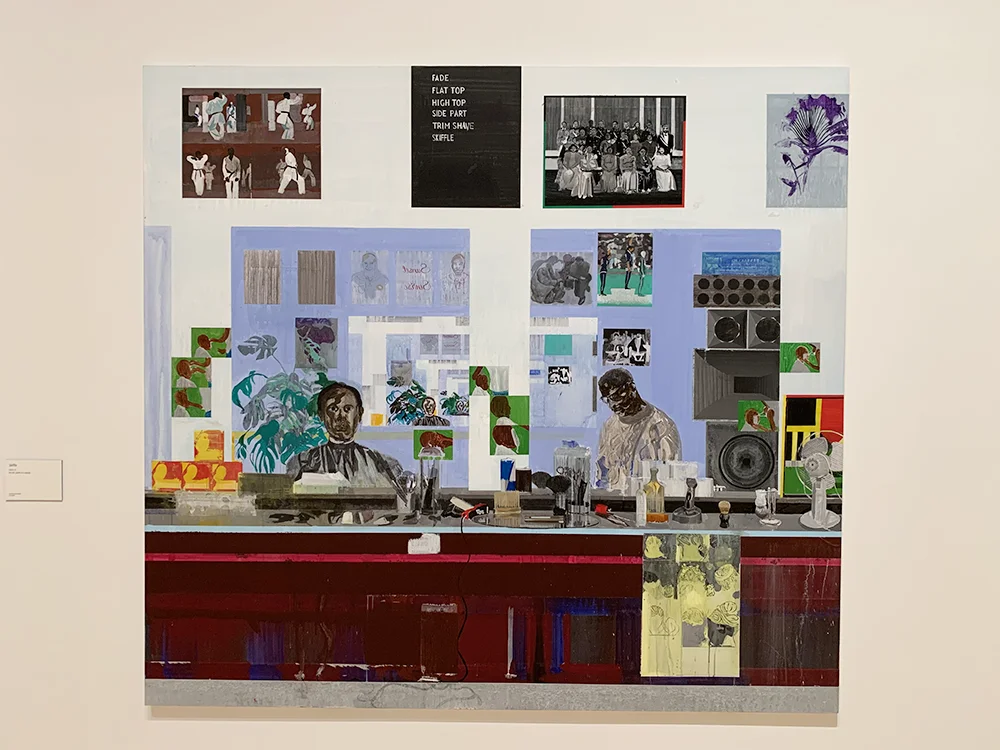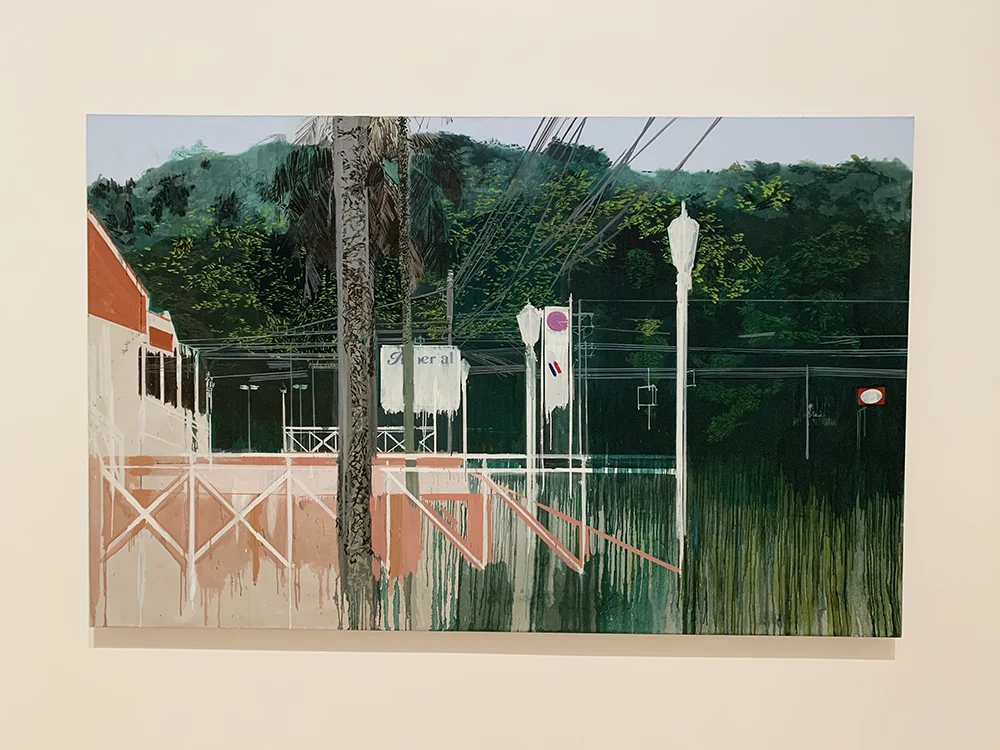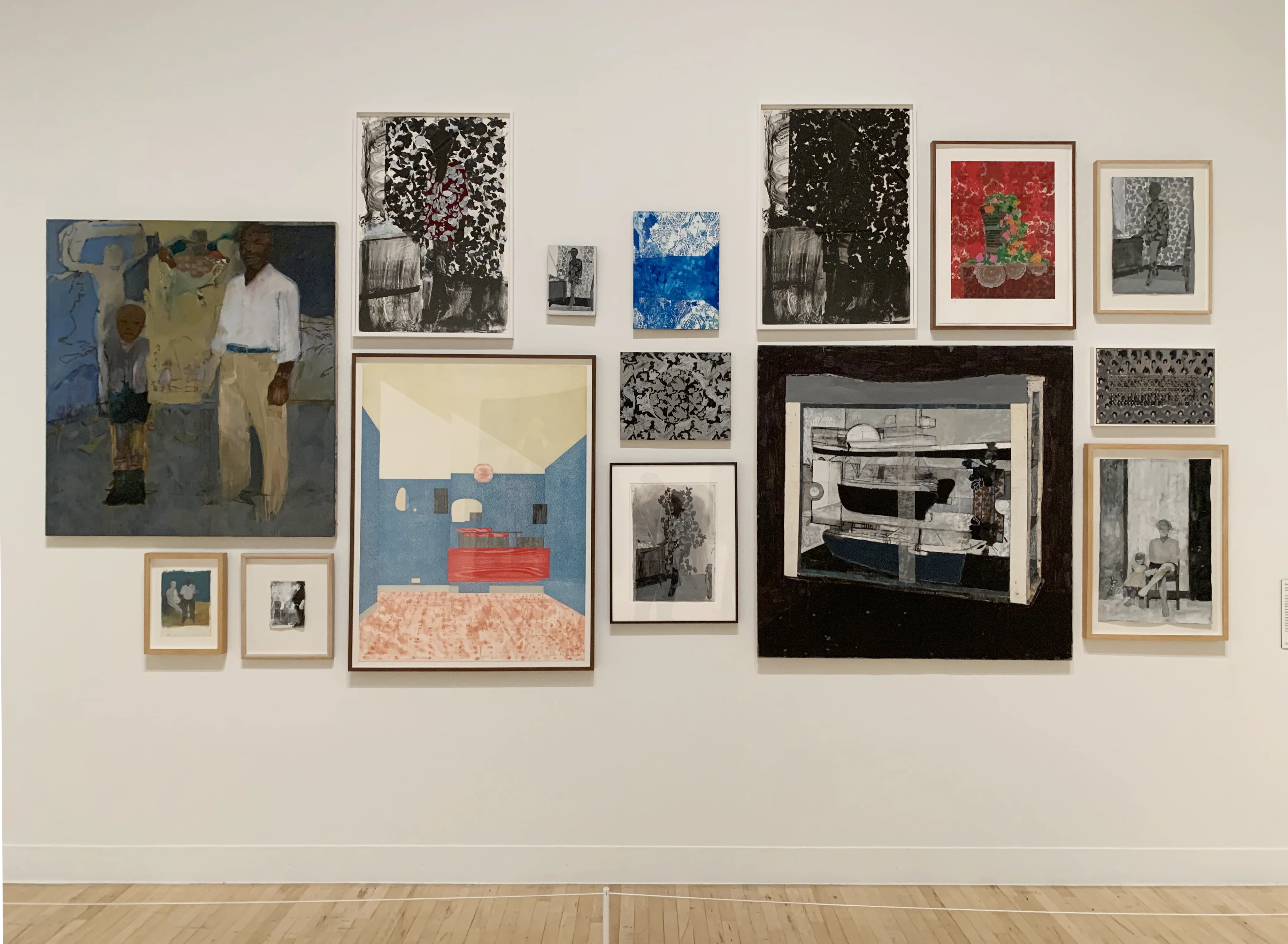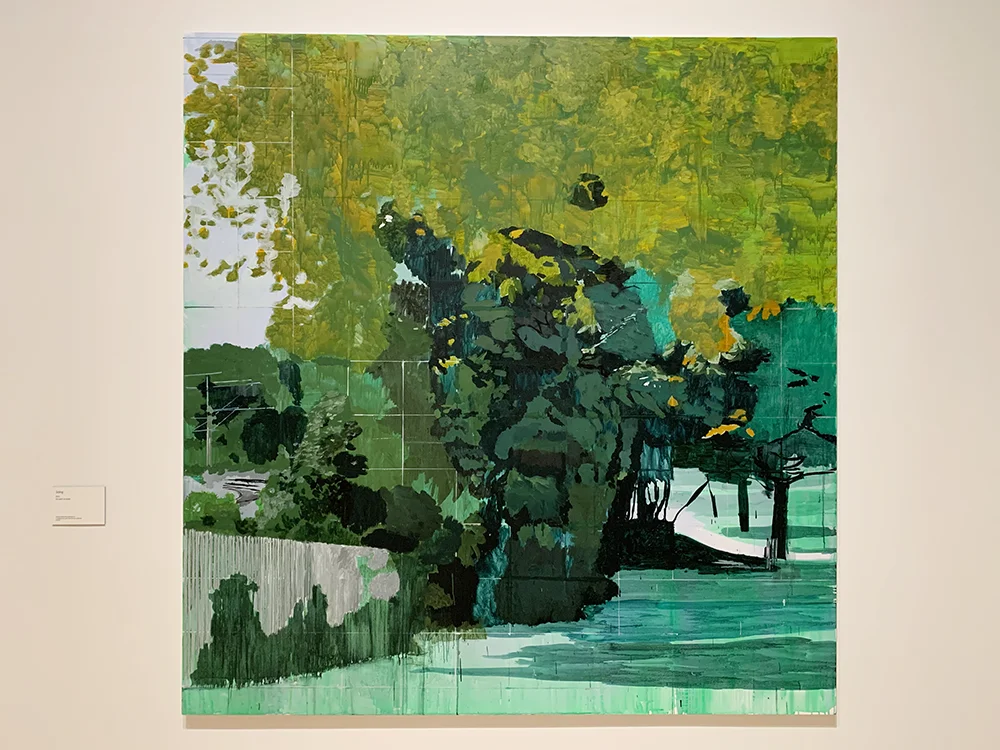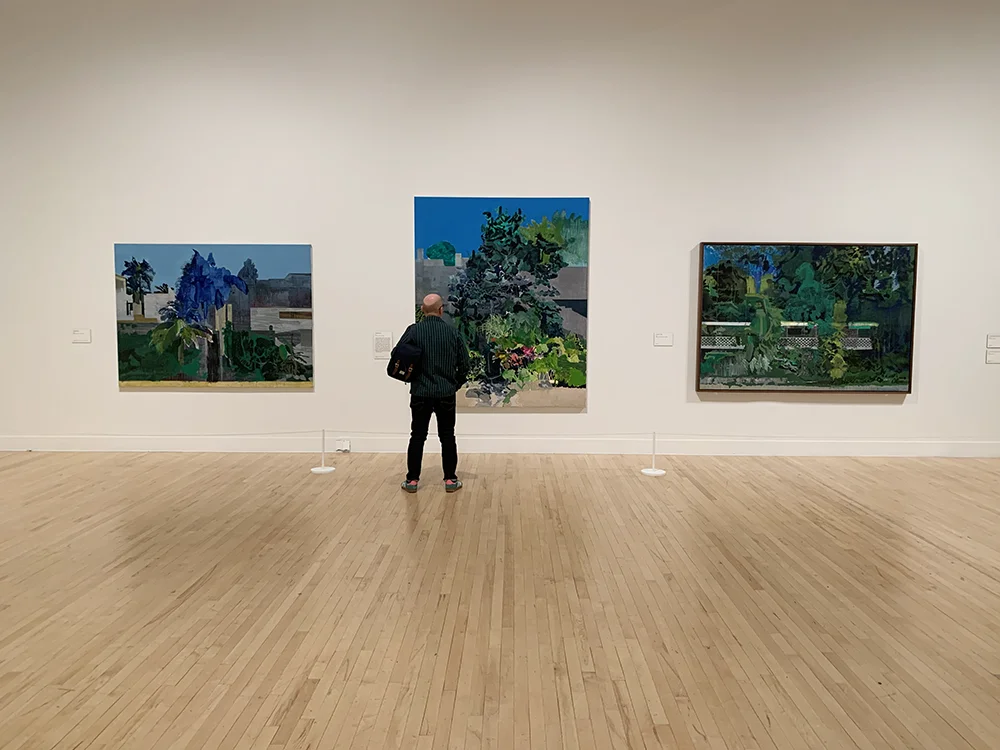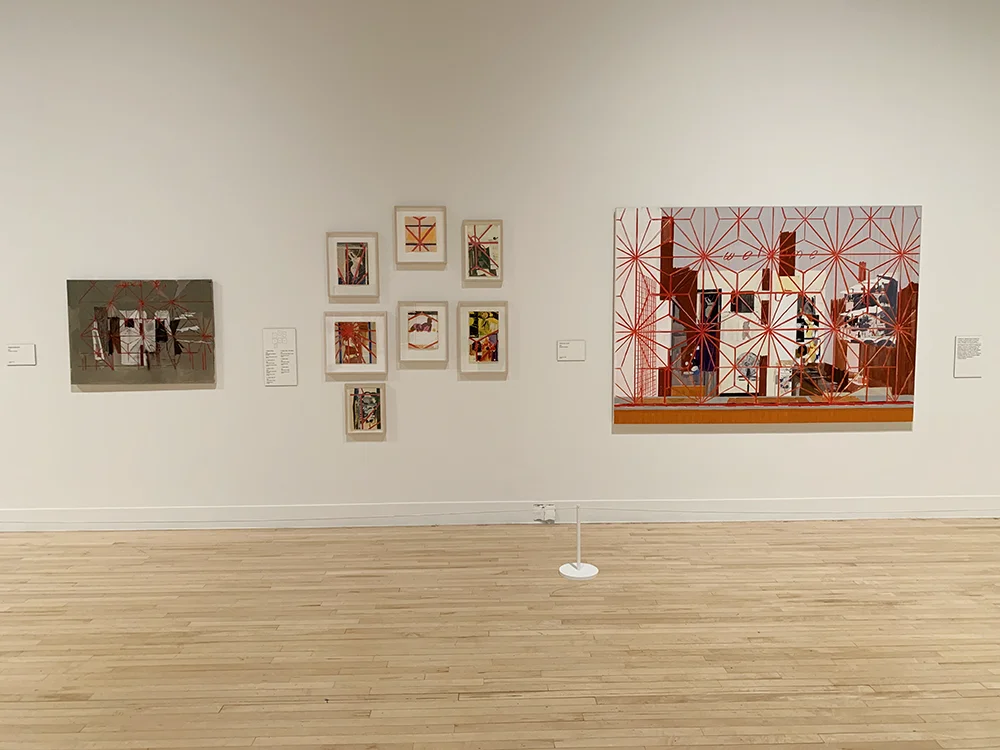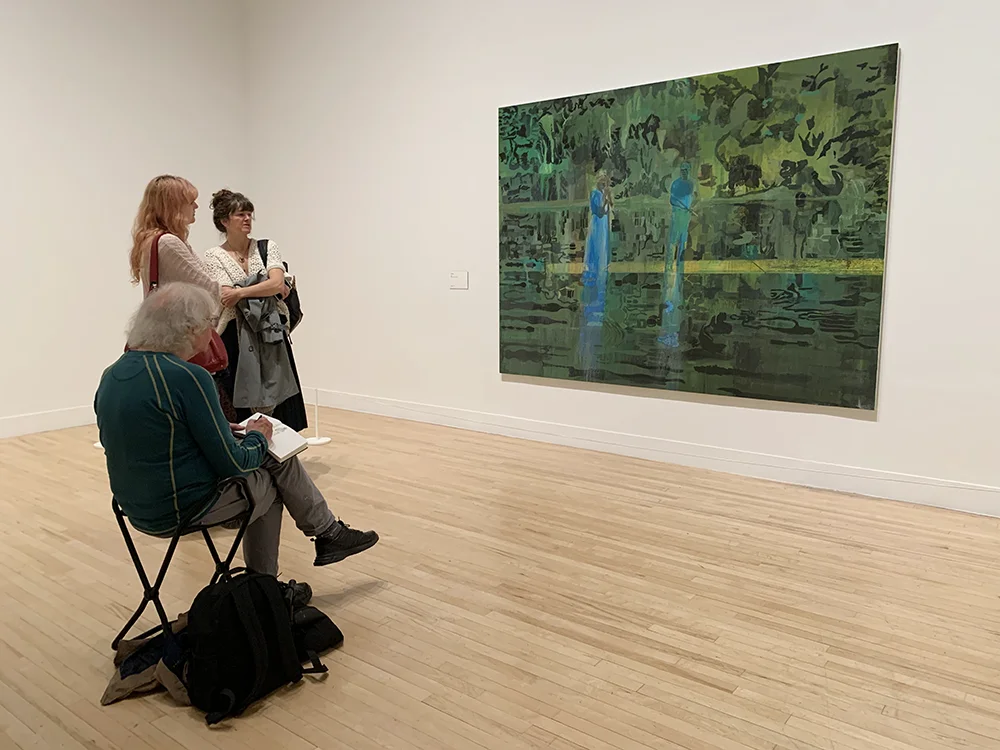
Hurvin Anderson’s retrospective at Tate Britain brings together more than 80 paintings spanning three decades. Moving between Britain and the Caribbean, the exhibition reveals how atmospheric landscapes and interiors become layered reflections on memory, migration, belonging, identity, cultural heritage and colonial legacies through painting itself.
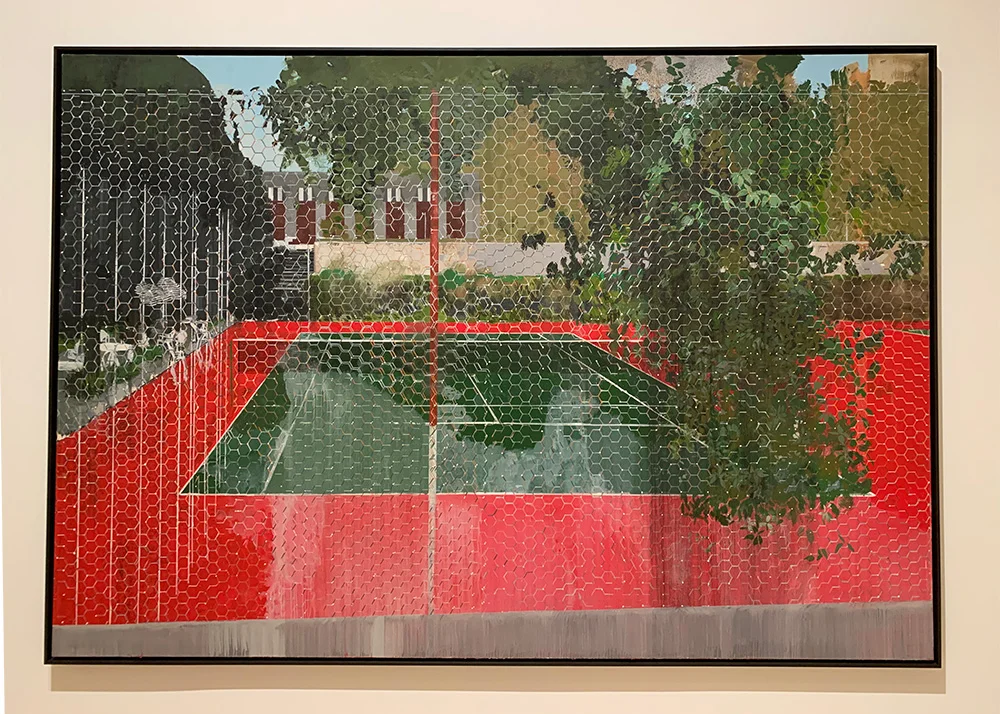
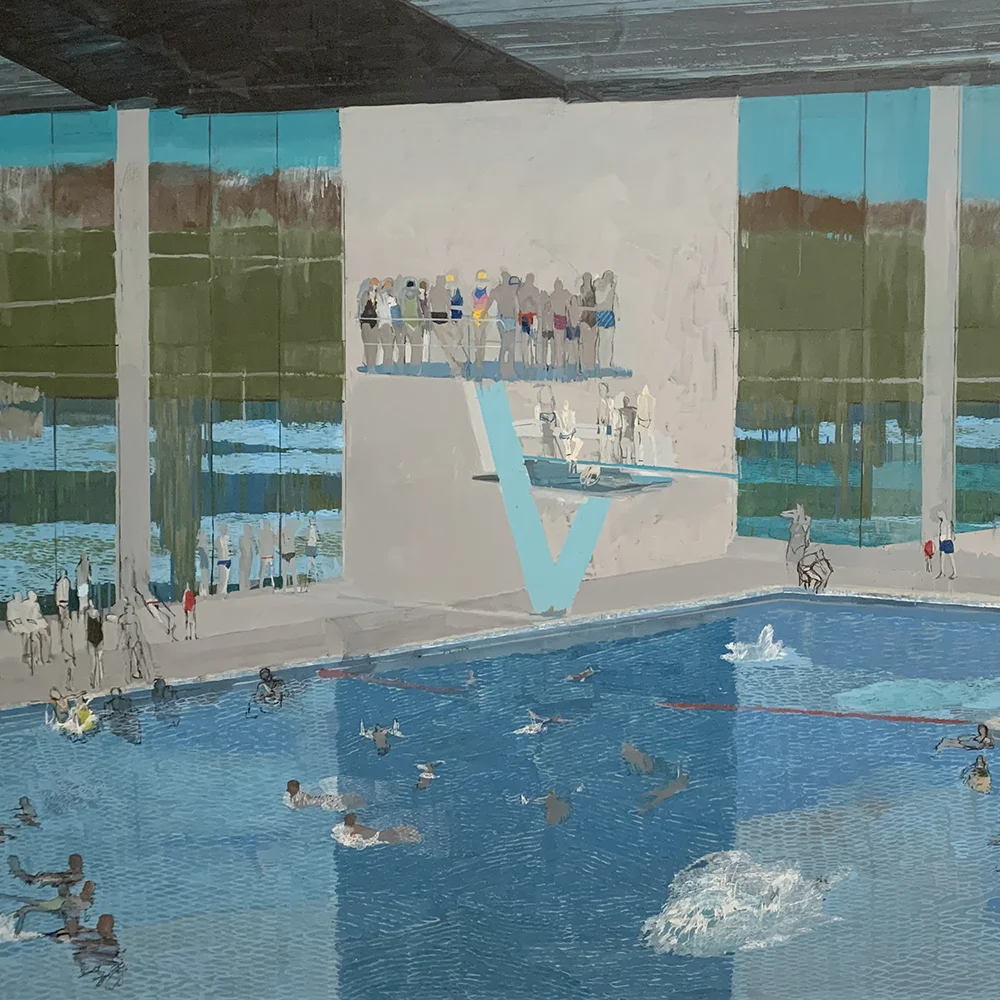
Curated by Dominique Heyse-Moore and Jasmine Kaur Chohan, the exhibition unfolds across six thematic sections, revealing how Anderson continually revisits familiar places and motifs as his relationship with them evolves. Parks and swimming pools in Birmingham, barbershops, and Caribbean country clubs seen through wrought iron grilles and fences become recurring settings in an ongoing dialogue between Britain and the Caribbean.
Visitors are introduced to the exhibition through the Ball Watching series, four paintings developed from a single sheet of paper. The works establish Anderson’s practice of returning to familiar images, revealing how memory shifts through repetition and allows the same subjects to acquire new meanings over time.
The later galleries draw on Anderson’s experiences in the Caribbean, particularly following a residency in Trinidad in 2002. Paintings such as Welcome: Carib and Country Club: Chicken Wire use security grilles, dense vegetation and layered compositions to partially obscure tropical landscapes, challenging idealized views of the Caribbean while reflecting the artist’s experience of feeling both connected to and separated from the region.
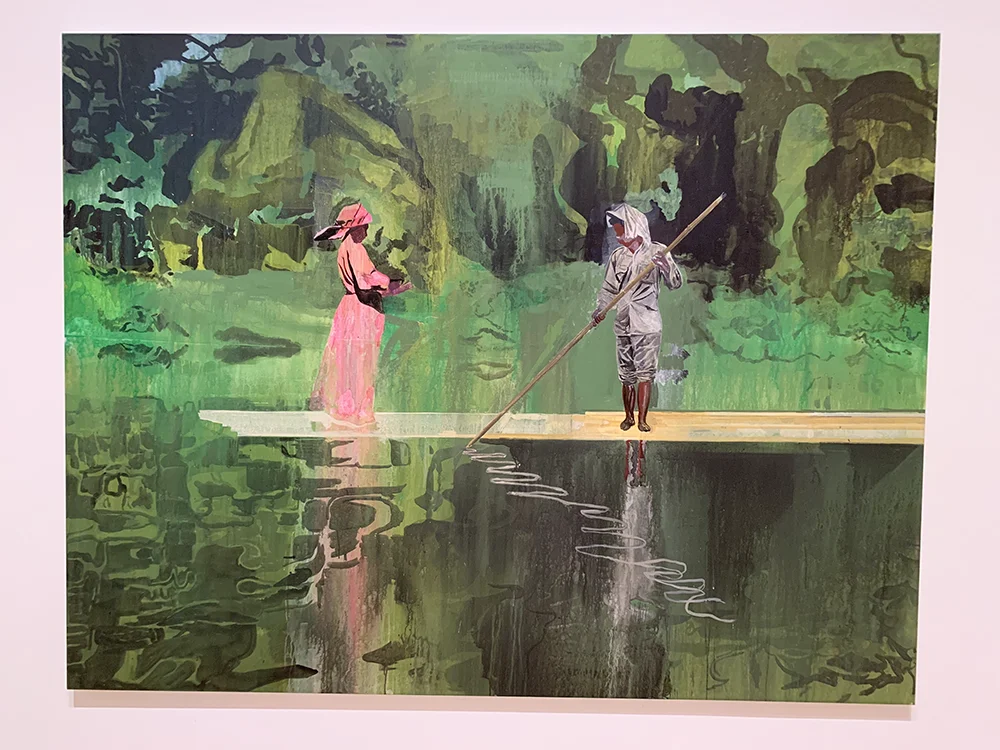
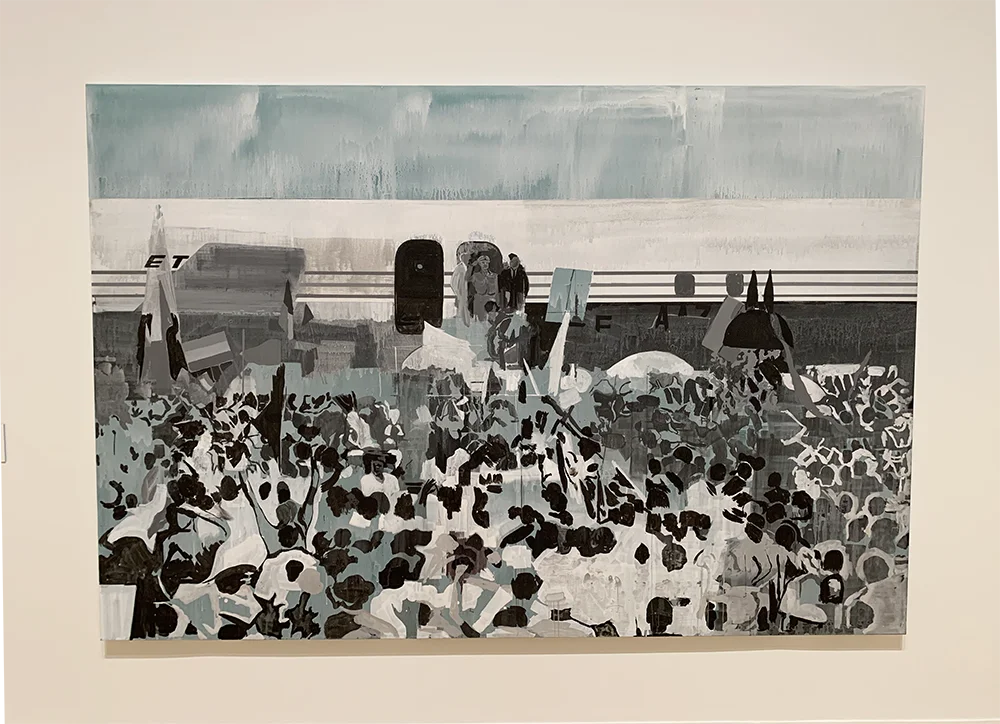
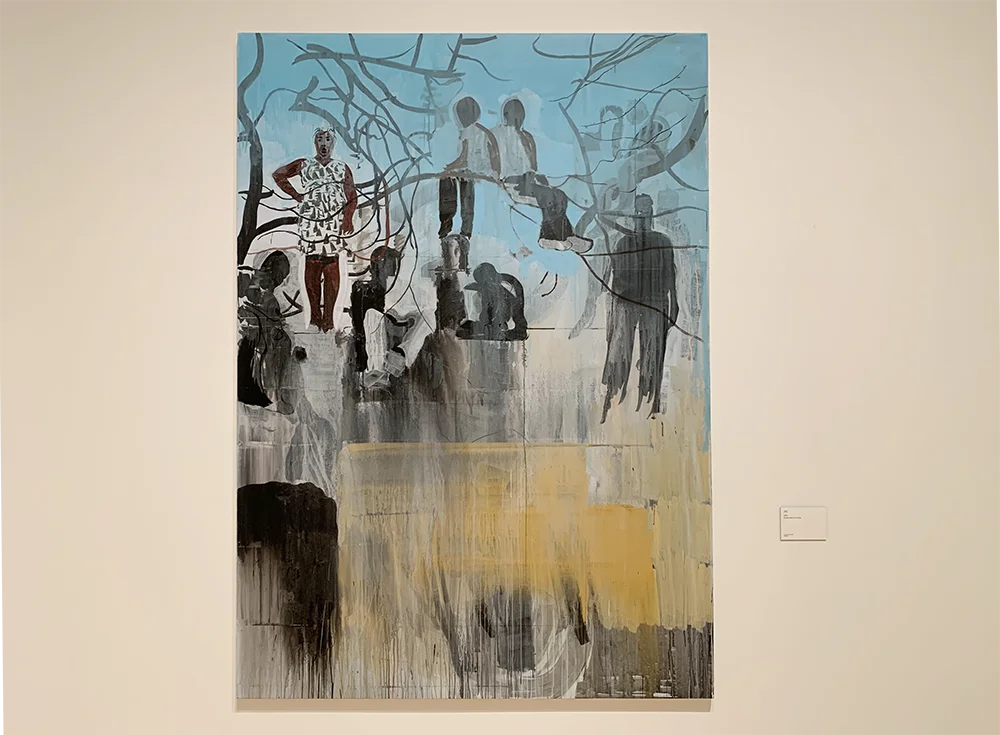
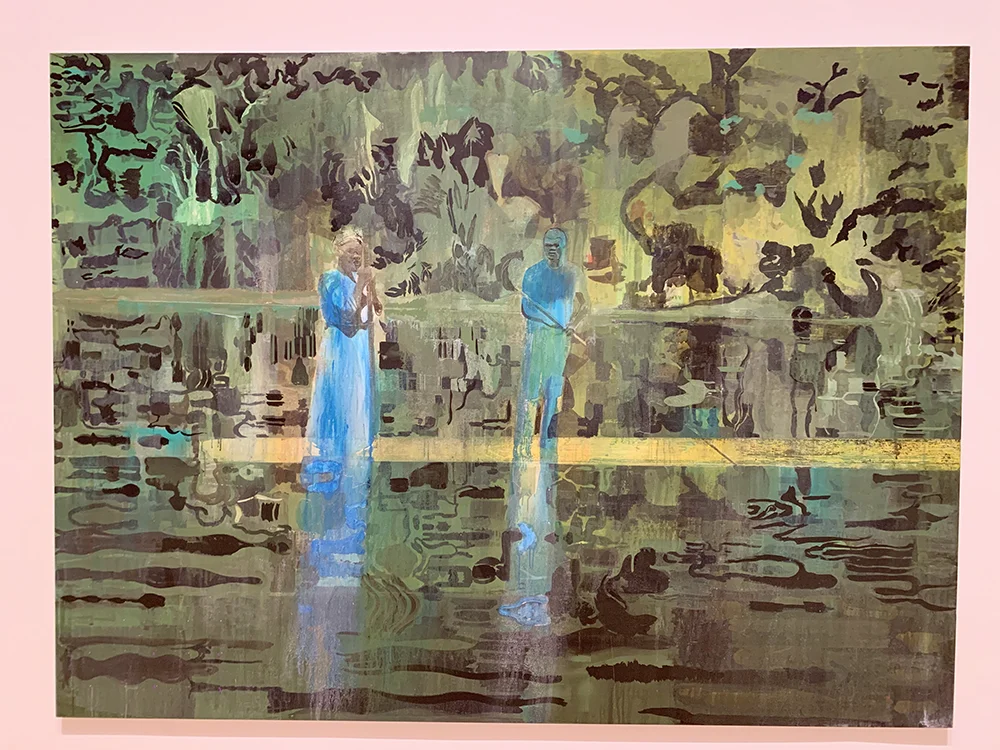
Family history provides another lens through which Anderson explores identity. Children climbing an apple tree in England are placed in dialogue with Ethiopian emperor Haile Selassie’s arrival in Jamaica in 1966, a defining moment for the Rastafari movement. Nearby, paintings depicting a couple rafting through an imagined slave-era Jamaica connect personal memory with colonial history while suggesting quiet acts of resilience.
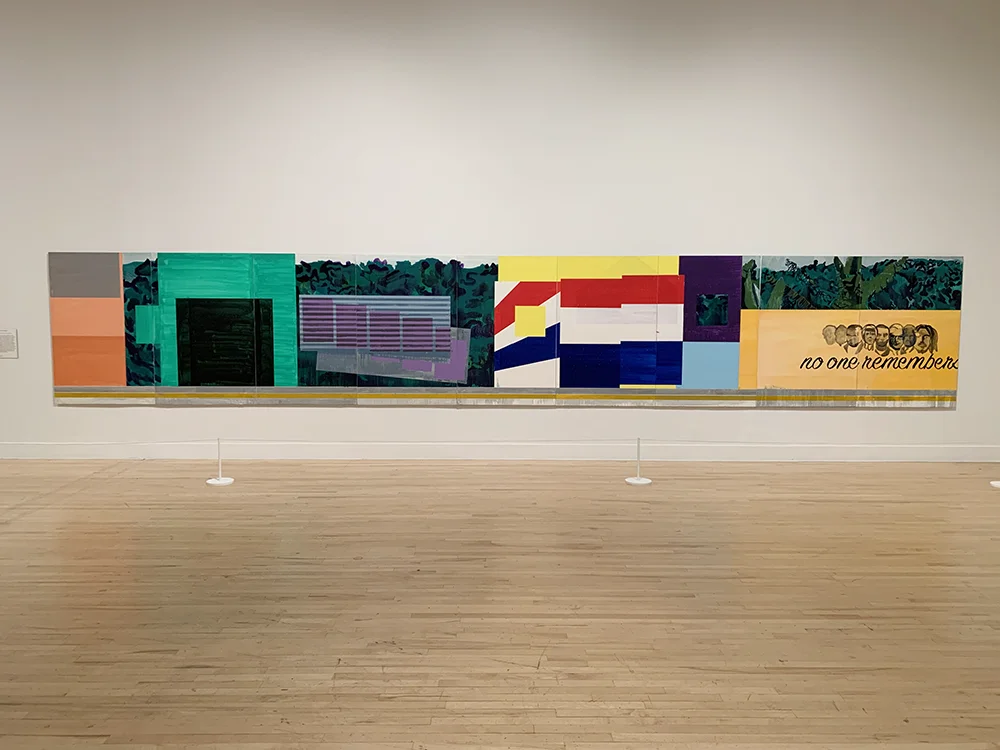
Another highlight is Passenger Opportunity, a sixteen-panel painting reworked for the exhibition that traces migration from post-war Jamaica to Britain while also looking further back to the history of transatlantic slavery. The retrospective concludes with a gallery of previously unseen paintings alongside a screening of the 1986 documentary Handsworth Songs, placing Anderson’s work within the wider story of Black British identity, migration and cultural memory.
Born in Birmingham in 1965 to Jamaican Windrush generation parents, Hurvin Anderson draws on photographs, memory and personal experience to create paintings shaped by his dual cultural heritage.
After studying at Wimbledon School of Art and the Royal College of Art, he established himself as one of Britain’s leading contemporary painters. Shortlisted for the Turner Prize in 2017, his work is now held in major collections including Tate, the Museum of Modern Art and the Metropolitan Museum of Art.