Art Basel Hong Kong 2026 opened to a market in transition, with blue-chip galleries reporting seven-figure sales, new voices drawing institutional attention, and the fair asserting its ambitions through bold structural additions. All of this unfolded against the backdrop of a city still recalibrating its place on the global art map.
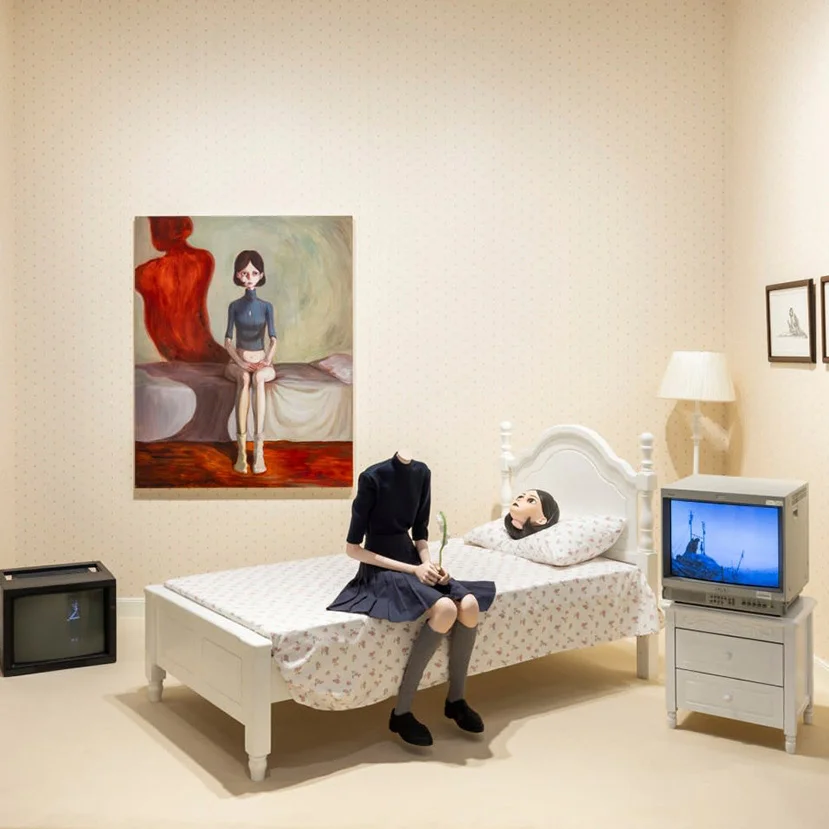
The VIP preview delivered a mixed picture. At the high end, major galleries reported strong sales. David Zwirner sold a Liu Ye painting and a Marlene Dumas canvas, each for $3.8 million. Hauser & Wirth had a solid start, moving a Louise Bourgeois sculpture for $2.2 million, a George Condo painting for $2.3 million, and a mixed-media Bourgeois work for $2.95 million.
White Cube reported roughly £4 million in first-day sales, including a Tracey Emin painting for £1.2 million. Bastian Gallery sold a 1964 Picasso for around €3.5 million. The fair’s priciest work, a Modigliani portrait at Pace, reportedly attracted bids starting at $13.3 million but remained on hold.
Further down the price ladder, Busan’s Johyun Gallery sold 37 works ranging from $9,000 to $180,000, and Tabula Rasa’s founder described a relentlessly busy preview. Smaller and mid-tier galleries, particularly those with strategic booth placement, reported results markedly better than the previous year.
Not all corners of the fair shared that energy, however. Pearl Lam’s Charmaine Chan, a Hong Kong veteran, observed that the decisive buying typical of local collectors was conspicuously absent and that sales were slower than usual.
Richard Nagy, whose gallery had yet to make a sale by 7 p.m., noted a near-total absence of pre-war art in his section and suggested collectors were price-checking online rather than committing on the floor.
The fair took place against significant global turbulence. Director Angelle Siyang-Le acknowledged that the event was projecting a vision of normalcy amid the largest supply disruption in global oil markets, triggered by the US-Israel conflict in Iran. The Chinese art market posted a 1% uptick in sales last year, per the Art Basel/UBS Art Market Report, representing modest stabilisation after years of contraction.
International VIPs attended in numbers comparable to last year, though the crowd skewed regional. European private buyers were thin on the ground, while West Coast US institutional buyers were more visible, including a delegation from SFMOMA.
The 2026 edition introduced two notable structural additions. Echoes, a new sector spotlighting mid-career artists with work made in the past five years, addresses a gap the fair had long left unfilled and gives mid-sized galleries expanded platform. Zero 10, Art Basel’s digital art initiative, makes its Asia debut after launching at Miami Beach in December 2025, with fourteen exhibitors presenting work across physical and digital registers to strong early response from curators and collectors.
The Encounters sector, dedicated to large-scale installations, was curated for the first time by a collective led by M+ director Mami Kataoka. Twelve works were presented, organised around the five elements in Asian cosmology.
Beyond the booths, Hong Kong’s broader cultural infrastructure is quietly consolidating. Four new galleries opened in the city during fair week, and Hong Kong has secured an exclusive five-year agreement with Art Basel, cementing its position as the region’s sole host as Singapore and Seoul compete for influence.
New Asian institutions were present at the fair, including Dib Bangkok and the Tanoto Art Foundation in Singapore. In mainland China, major new state museums for contemporary art signal a maturing institutional landscape that relieves pressure on smaller private foundations.
Whatever uncertainties remain in the market, the city, or the wider world, Art Basel Hong Kong 2026 made a compelling case for Hong Kong as a cultural force that is still very much in motion.